Safety guide
How to Stay Safe in a Hotel Room Abroad
Almost every hotel stay is completely uneventful — but a two-minute routine and a few pocket-sized devices turn 'I hope this room's fine' into 'I know it is.' Especially worth it for solo travelers, budget stays, and unfamiliar countries. Here's the honest checklist, and the handful of gadgets that actually earn their place in your bag.
2026-10-18
Some links on this page are Amazon affiliate links: if you buy through them, Arrival Brief earns a small commission at no extra cost to you. We recommend gear by what to look for, not specific brands, and a commission never changes our advice. More →
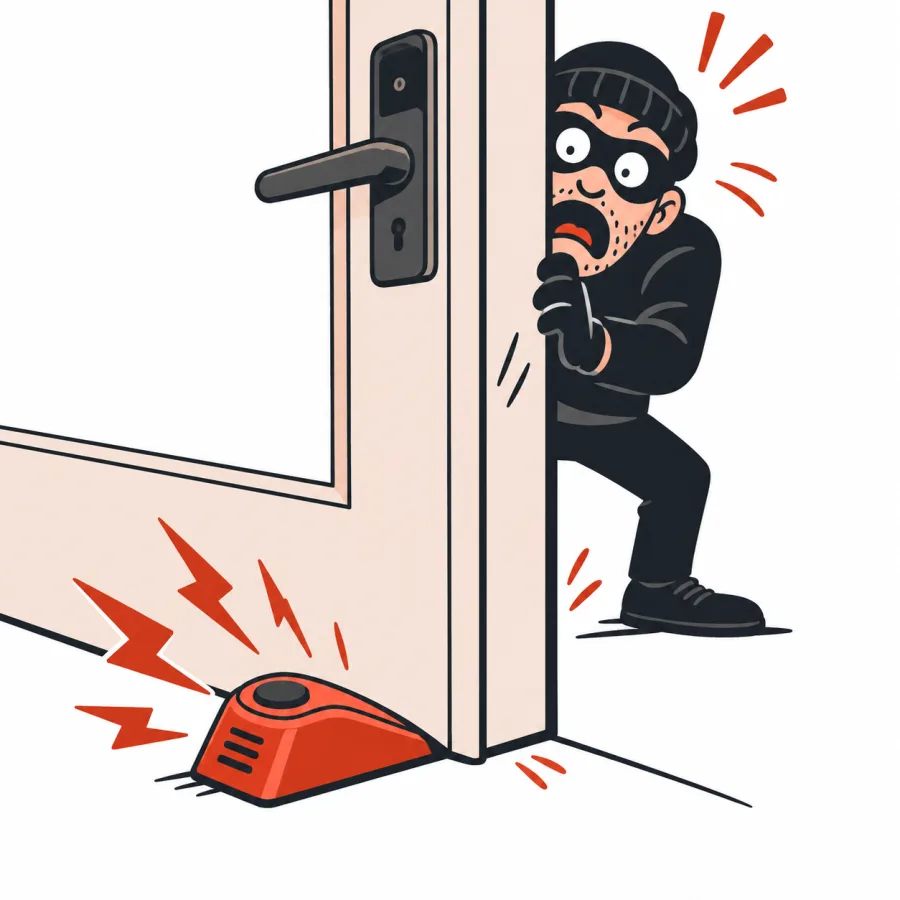
Hotel safety is mostly a non-event: you check in, the door locks, nothing happens. But the gap between hoping a room is fine and knowing it is comes down to a two-minute routine and a handful of pocket-sized devices — the kind of cheap insurance that lets you actually relax. It matters most for solo travelers, budget hotels and hostels, and first nights in an unfamiliar country. Here’s the honest checklist, and the few gadgets that earn their place in your bag.
The two-minute room check (do it on arrival)
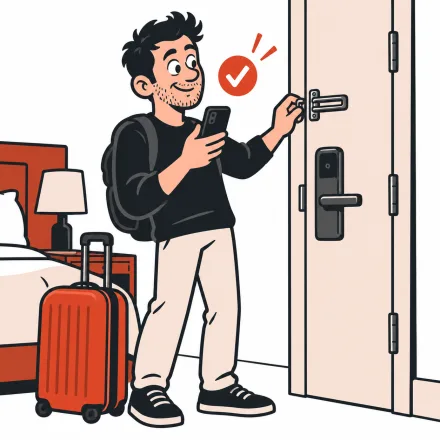
Before you unpack, walk the room once:
- The door. Confirm it closes fully and latches, and that the deadbolt and the swing-latch (the flip-bar) both work. This is the single most important check — a door that doesn’t lock properly is the only real red flag, and it’s grounds to ask for another room.
- The peephole and windows. Peephole clear and undamaged; windows and balcony/connecting doors lock (ground-floor and connecting-room doors especially).
- The fire exit. Find the nearest one and count the doors to it from your room — so you could reach it in the dark or smoke. Check the back of the door for the floor plan.
- A quick scan. Anything that looks off — a device pointed oddly at the bed, a wire that goes nowhere, a smoke detector with a pinhole. (More on hidden cameras below.)
That’s it — two minutes that catch the only things worth catching.
Lock a door you don’t fully trust
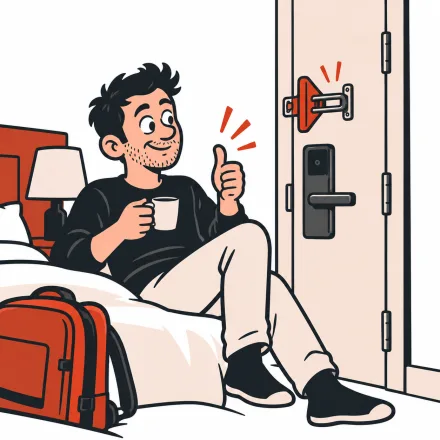
You can’t change the hotel’s hardware, so the fix is a lock you carry. Two pocket-sized tools cover it, and many travelers pack both.
A portable door lock grips the strike plate or latch on an inward-opening door (most hotel doors) and physically stops it opening — even with a key or keycard. That’s its edge over the built-in swing-latch. A door-stop alarm wedges under the door and sounds a loud alarm the instant someone pushes it, resisting the door and buying you noise, attention, and a few seconds of warning at night.
What to look for: a portable lock rated for inward-opening doors (check before you buy), and a wedge alarm that’s genuinely loud and needs no installation. Both are TSA-friendly and legal to carry.
Browse portable door locks → Browse door-stop alarms →
A door or window alarm you hang and forget
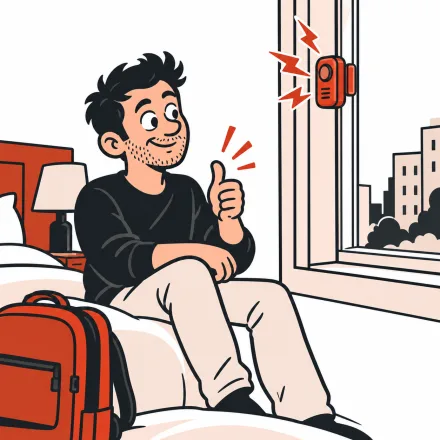
The lightest layer of all: a small door/window alarm that sticks or hangs on the door (or a connecting/balcony door) and shrieks the moment it’s opened. It weighs nothing, runs for ages on a coin cell, and is the easiest way to turn any door or window into a tripwire while you sleep.
What to look for: a hang-on or stick-on design (no tools), a loud 100dB+ siren, and a simple on/off so you don’t set it off yourself coming back in.
Browse hang-on door & window alarms →
Scan for hidden cameras (a calm check, not paranoia)
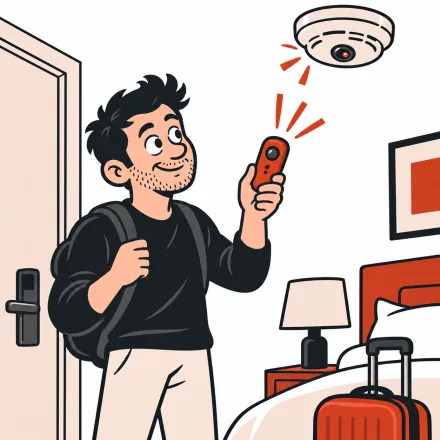
Hidden cameras in hotels are rare — more of a concern in short-term rentals than hotels — but a quick scan costs nothing and settles the question so you can forget it. Look first at anything with a view of the bed or bathroom: smoke detectors, alarm clocks, TVs, air purifiers, vents, outlets, and picture frames. Turn off the lights and slowly pan the room with your phone camera and a flashlight — a lens often throws back a small bright glint. Watch for an out-of-place pinhole, wire, or LED.
For a proper sweep, a dedicated hidden-camera detector pairs an RF scanner (picks up wireless transmitters) with a lens finder (red LEDs that make a hidden lens flash back). It’s the difference between a guess and a real check — reassuring on a longer stay or in a rental.
What to look for: a unit with both RF detection and a lens finder, simple controls, and a rechargeable battery. If you ever do find a concealed camera, don’t touch it — photograph it, leave, and report it to the police and the property.
Browse hidden-camera detectors →
Valuables: don’t fully trust the room safe
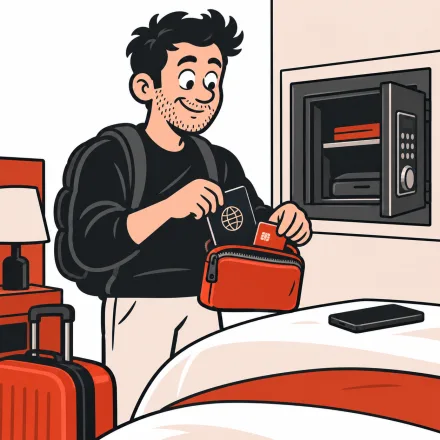
Treat the in-room safe as a convenience, not a vault. It stops a casual grab and keeps things out of sight from housekeeping — useful — but many run on factory default codes or staff override keys, and the cheap ones can be forced. Set your own code (never leave it on 0000), use it for day-to-day items, but keep the things you truly can’t replace quickly — passport, a backup card, emergency cash — in a portable travel safe (a slash-resistant, lockable pouch you can cable to a fixed fixture) or on your person.
This is the two-pocket system applied to the room: the stuff you use by day in your front-worn bag, the backups locked away or hidden. Photograph your passport and cards so any loss is recoverable.
Browse portable travel safes →
A personal alarm by the bed
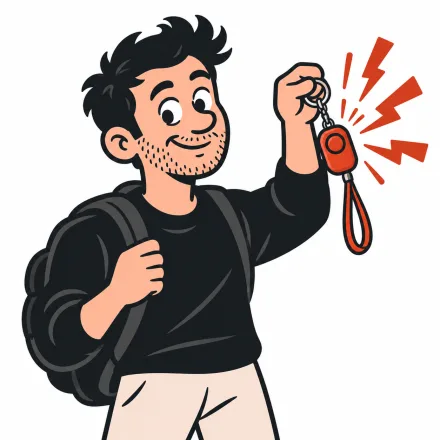
The simple, universally-legal tool a lot of travelers overlook. A personal alarm is a loud (120dB+) deterrent you can trigger instantly — it draws attention and startles, which is often all it takes. Unlike pepper spray (restricted or illegal in much of the world and a no-fly in carry-on), it’s legal essentially everywhere and fine to fly with, so it’s the sensible personal-safety pick for international travel. Keep it and your phone within reach at night.
Browse personal safety alarms →
The habits that matter more than any gadget
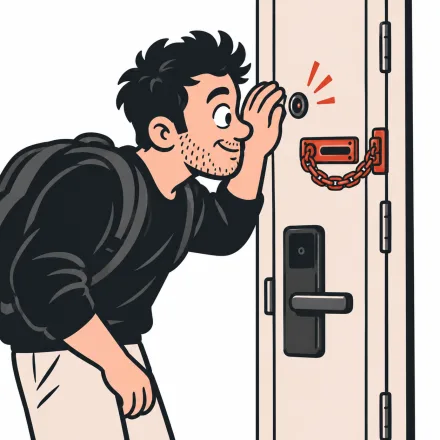
- Don’t open the door to a surprise “staff” visit. If someone claims to be housekeeping, maintenance, or the front desk and you weren’t expecting them, call the front desk to confirm before opening. A common hotel scam is a caller posing as reception to “verify your card number” — hang up and go to the desk in person; real hotels don’t do that.
- Keep your room number private. Don’t say it aloud at check-in or leave the keycard sleeve (with the number written on it) lying around.
- Know your exits and heed alarms. Count the doors to the fire exit; never assume a fire alarm is a drill.
- Tell someone where you are. Share your hotel and itinerary with someone at home — a dedicated tool like Awaycard builds one shareable, offline travel card (hotel, contacts, key info) that family can hold onto, no account or signal needed. If a phone is lost, someone still has the details.
What to skip
- Over-kitting. A portable door lock or a door-stop alarm, a personal alarm, and (for longer stays or rentals) a camera detector cover almost everyone. You don’t need the whole catalog.
- Anything bulky or “tactical.” The goal is quiet reassurance you’ll actually pack, not a kit you leave at home.
- Assuming the worst. The point of all of this is the opposite of fear: a quick routine and a couple of cheap devices so you can stop thinking about it and enjoy the trip.
The gear supports the routine, not the other way around — the city briefs tell you where the real on-the-ground risks live, and the anti-theft gear guide covers everything you carry outside the room.
Quick answers
How can I stay safe in a hotel room?
Run a two-minute check when you arrive, then add one or two cheap layers for peace of mind. On arrival: confirm the door closes fully and the deadbolt and swing-latch both work, check the peephole is clear and windows and balcony doors lock, and locate the nearest fire exit (count the doors to it). For the night, a portable door lock or a door-stop alarm adds a layer to a door you don't fully trust — the alarm's shriek buys you time and attention if anyone tries the handle. Keep valuables in a portable travel safe or on your person rather than trusting the in-room safe completely, don't open the door to anyone you didn't verify by calling the front desk, and keep a personal alarm and your phone within reach at night. None of this assumes a hotel is dangerous — it's cheap insurance that lets you actually relax, which is the whole point.
How do I check a hotel room for hidden cameras?
Hidden cameras in hotels are rare (they're more of a concern in short-term rentals), but a quick scan costs nothing and settles the question. Start with the spots that get a view of the bed and bathroom: smoke detectors, alarm clocks, TVs, air purifiers, vents, outlets, picture frames, and anything pointed oddly at the bed. Turn off the lights and slowly scan the room with your phone camera and a flashlight — a camera lens often throws back a small bright reflection. Check whether any device has a tiny pinhole or an unexplained wire or light. For a thorough sweep, a dedicated hidden-camera detector combines an RF scanner (to pick up wireless transmitters) with a lens finder (red LEDs that make a lens glint); it's the tool that turns a guess into a real check. If you ever do find a concealed camera, don't touch it — photograph it, leave the room, and report it to the police and the property. For the vast majority of stays you'll find nothing, which is exactly the reassurance you're after.
What's the best lock for a hotel door?
For a traveler, the best 'lock' is a portable one you carry, because you can't modify the hotel's hardware. Two pocket-sized options cover it. A portable door lock (an add-on device that grips the strike plate or latch on inward-opening doors — most hotel doors) physically stops the door opening even with a key or keycard, which is its big advantage over the built-in swing-latch. A door-stop alarm wedges under the door and sounds a loud alarm (and resists the door being pushed) the moment someone tries to open it — simple, needs no fitting, and doubles as a wake-up-and-get-attention device at night. Many travelers carry both: the lock for a physical barrier, the wedge alarm for noise and a second line. Both are cheap, TSA-friendly, and legal to carry; just confirm the lock type suits an inward-opening door before you buy.
Are hotel room safes actually safe?
Treat the in-room safe as a convenience, not a vault. They stop a casual grab and keep valuables out of sight from housekeeping, which is useful — but they're not high-security: many run on factory default master codes or override keys that staff (and anyone who's looked up the model) can open, and the cheap ones can be forced. So use it for day-to-day peace of mind, but for a passport, a backup card, and emergency cash, a portable travel safe (a slash-resistant, lockable pouch you can cable to a fixed fixture) or keeping the essentials on your person is the safer play. Set your own code if the safe lets you, never leave it on 0000 or the default, and photograph your passport and cards so a loss is recoverable. The point isn't that room safes are useless — it's that you shouldn't trust them with the one thing you truly can't replace quickly.
How can solo female travelers stay safe in hotels?
The habits are the same ones that make any solo stay feel secure, applied a little more deliberately. At check-in, don't say your room number out loud (ask staff to write it down), and if it's offered, ask them to note the booking as two guests. Prefer a room that's not at the far, isolated end of a corridor, on a higher floor than ground level but within fire-ladder reach (roughly floors 2–6). In the room, use the deadbolt and swing-latch plus a portable door lock or door-stop alarm at night, keep a personal alarm and your phone by the bed, and never open the door to an unexpected 'staff' visit without calling the front desk to confirm first. Share your hotel name and itinerary with someone at home, and trust your instincts — ask to change rooms if anything feels off. None of this assumes danger; it's a routine that lets you switch off and sleep, which is the real goal.